
There is a question that almost every founder, product manager, or business owner asks before they commit to building a digital product. It sounds simple on the surface, but the answer is rarely straightforward: How much does it actually cost to build an app?
If you have spent any time researching this, you have probably encountered articles that throw out ballpark numbers with little context, or pricing tables that feel detached from how software development actually works. The goal of this guide is different. We want to walk you through how app development cost is genuinely structured in 2026, what factors shape it, and how to think about mobile application development cost in a way that helps you make a confident, informed decision rather than a guesswork one.
India has become one of the most respected destinations for building digital products for global markets. That reputation has been earned over two decades through technical depth, English fluency, time zone flexibility, and a maturing ecosystem of development talent. But even within India, the range of what you might pay, and what you get for that investment, varies considerably. Understanding why is the whole point of this guide.
Why App Development Cost Is Never a Fixed Number
The most honest thing anyone can tell you about mobile application development cost is that it is deeply contextual. It is not a product sitting on a shelf with a price tag. It is more like commissioning an architect to design a building. The cost depends on what you are building, how complex it needs to be, what materials are used, and who is doing the work.
A basic informational app with a few screens and no backend logic is a fundamentally different project from a fintech platform with real time data processing, multi-currency transactions, and regulatory compliance requirements. Treating them as comparable when budgeting is one of the most common mistakes we see.
So before we talk about ranges, let us talk about what actually moves the needle on cost.
The Factors That Determine What You Will Actually Pay
Complexity and Scope of Features
This is the single biggest driver of app development cost. A simple app with a handful of screens, basic user authentication, and no real time functionality sits at one end of the spectrum. At the other end, you have apps with live dashboards, AI driven recommendations, video streaming, multilingual support, complex role based access, or marketplace dynamics connecting multiple user types.
Every feature your product needs has a development cost attached to it. Not just in the time to build it, but in the thinking, architecture decisions, testing, and iteration that surrounds it. The more your app does, the more it costs to build and maintain. This is not a negative, it is simply the reality of crafting software that works reliably at scale.
Platform Choice: iOS, Android, or Cross Platform
Building natively for iOS and Android separately has traditionally meant two separate codebases, two development teams, and roughly double the effort for feature parity. For many startups, this approach is neither practical nor necessary in the early stages.
Cross platform frameworks like Flutter and React Native have matured significantly. In 2026, they are no longer the compromise they once seemed. A well architected Flutter app delivers a near native experience across both platforms from a single codebase, and the development timeline can be considerably shorter than going native on both. For most early to mid stage products, cross platform is not a cost cutting shortcut, it is a genuinely smart strategic choice.
That said, if your product relies heavily on platform specific capabilities, such as deep hardware integrations, advanced AR features, or very complex animations, native development may still make more sense. The right answer depends on your product, not a blanket recommendation.
Backend Architecture and Infrastructure
The frontend of your app, the screens users interact with, is only part of the picture. Behind it sits the backend: servers, databases, APIs, authentication systems, notification services, payment gateways, and everything else that makes the app function. This is often where a significant portion of the mobile application development cost lives, and it is frequently underestimated by first time founders.
In 2026, cloud native architecture has become the standard rather than an exception. Building on platforms like AWS, Google Cloud, or Azure means your infrastructure can scale with your user base without needing to rebuild from scratch. Serverless functions, managed databases, and containerised deployments have made this more accessible than it was even a few years ago. But designing this architecture properly from day one still requires experienced engineers who understand both the technical and business implications of their decisions.
Integrations With Third Party Services
Almost every app today connects to something external. Payment gateways, maps, analytics, CRM systems, communication APIs, social logins, ERP platforms. Each integration adds complexity, and some are significantly more involved than others.
A payment gateway integration, for instance, is not just about sending a user's card details somewhere. It involves handling success and failure states gracefully, managing webhooks for asynchronous events, implementing security protocols, and ensuring your implementation meets PCI compliance standards. That is meaningful engineering work, and it adds to the total cost in ways that are easy to underestimate if you have not built these systems before.
UI and UX Design Quality
Design is not a cosmetic layer placed on top of engineering. In well run product teams, design and development work together from the beginning. The quality of your user experience directly affects retention, conversion, and how users feel about your brand.
Investing in thoughtful UX research, well defined user flows, and a polished visual design language tends to pay dividends over the lifetime of a product. Cutting corners here often creates expensive problems later, both in user satisfaction and in rework costs when the design needs to be revisited post launch.
Team Structure and Expertise
Not all development teams are the same, and this is one of the most important things to understand about app development cost in India. A solo freelancer, a small boutique studio, and a mid-size product development agency are very different propositions.
Freelancers often offer the lowest hourly rates, but they typically lack the product thinking, project management discipline, and cross functional depth that a growing product needs. Boutique studios and agencies bring more structure, but they vary enormously in how well they understand product strategy versus just executing code.
The teams that consistently deliver well are the ones where engineering and design think together, where there is genuine ownership of outcomes, and where communication is a priority rather than an afterthought. That kind of team tends to cost more upfront but produces significantly less rework and technical debt over time.
How AI Is Reshaping Development Timelines and Costs in 2026
This is worth discussing separately because it is genuinely changing how software gets built, and that change is accelerating.
AI assisted development tools are now embedded in day to day engineering workflows. Code generation, automated testing, boilerplate reduction, and intelligent code review have become practical, not theoretical. A skilled engineer using these tools well can move meaningfully faster than the same engineer working without them. At the same time, AI does not replace the need for architectural thinking, product judgment, or quality assurance.
What this means in practice is that timelines for certain types of work have shortened, particularly for standard CRUD functionality, API scaffolding, and routine integrations. But the more complex and unique a feature is, the less AI tooling accelerates it. Novel business logic, unusual data structures, and complex real time systems still require deep human expertise and careful thinking.
For clients, this means that agencies using modern AI assisted workflows thoughtfully can often deliver more within a given budget than would have been possible even two years ago. It also means that the conversation about what your money buys has evolved. The value is increasingly in product thinking, architecture decisions, and the judgment calls that no AI tool can make on your behalf.
AI is also opening new product possibilities. Features that once required large data science teams, such as personalised recommendations, intelligent search, or conversational interfaces, are now achievable for early stage products through well integrated APIs and fine tuned models. If your product roadmap includes AI features, the cost of building them has come down considerably, though doing it well still requires experience.
Realistic Cost Ranges for International Markets in 2026
Rather than giving you fixed numbers that will be outdated the moment you read them, we want to frame this in terms of what different investment levels typically produce when working with Indian development teams serving global clients.
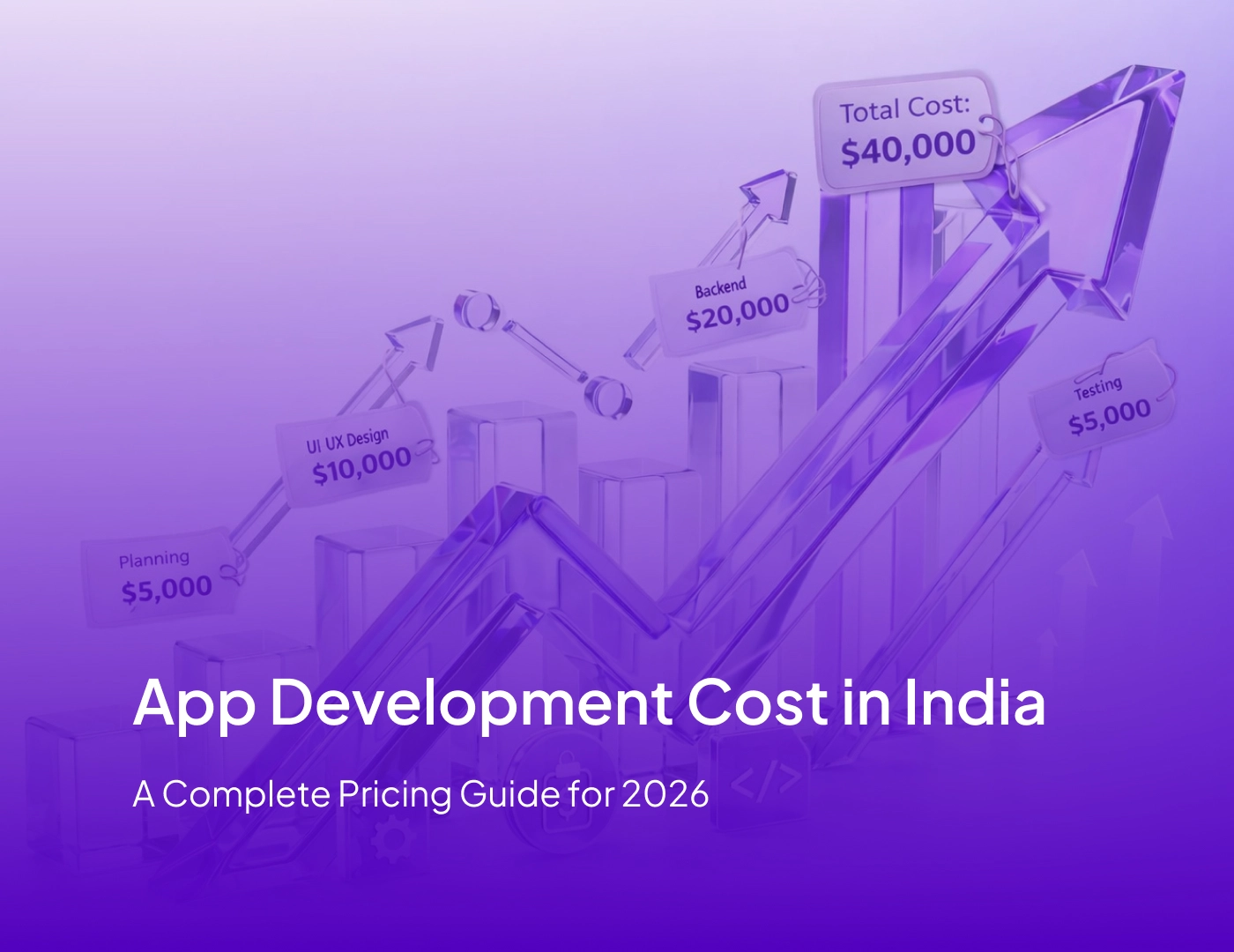
A simple, single platform app with core features, a basic backend, and no complex integrations typically falls in the range of $15,000 to $40,000. This gets you a functional product with a clean user interface, but limited scope for complexity. It is often appropriate for a first version designed to validate a market assumption.
A mid complexity app built for cross platform deployment, with a more robust backend, several third party integrations, and a considered design system, generally sits in the $40,000 to $120,000 range. This is where most serious startups operating in a competitive space find themselves when building their first real version.
More sophisticated products, platforms with marketplace dynamics, real time features, AI integrations, complex admin dashboards, regulatory compliance requirements, or significant scale expectations, tend to require investments from $120,000 upward. These are not just apps, they are platforms, and the cost reflects the engineering depth and ongoing architectural care they require.
It is also worth noting that the initial build is rarely the end of the investment. Maintenance, infrastructure costs, ongoing feature development, and platform updates are part of the real picture of what a digital product costs over its lifetime.
The Hidden Costs Most Budgets Overlook
Project management and communication overhead. Quality assurance and testing. App store fees and submission processes. Security audits. Performance optimisation as user numbers grow. Third party service subscriptions. Post launch bug fixes. Documentation.
None of these are optional. They are part of what it takes to ship a product that works reliably and keeps working. A development estimate that does not account for these is an incomplete estimate, and one of the most common sources of budget surprises.
When evaluating proposals, ask specifically how each of these is handled. A team that has thought about these things and can speak to them confidently is a team that has actually shipped products before.
Choosing the Right Development Partner in India
India is home to thousands of development firms, ranging from large IT outsourcing companies to specialist product studios. The size of a team does not determine its quality. Some of the best product work we have seen come out of India has come from focused, experienced teams of fifteen to thirty people who know exactly what they are doing and why.
When evaluating a potential partner, look beyond their portfolio of screenshots. Ask about how they handled a project that did not go according to plan. Ask how they approach scope changes mid project. Ask what their process looks like for understanding your users and business model before writing a line of code. The answers to these questions tell you far more than a list of technologies they have used.
A good development partner will push back thoughtfully when they believe a different approach serves your product better. They will tell you when something is technically inadvisable, not just technically possible. That kind of honesty in the early stages of a relationship is genuinely valuable
Building for the Long Term in 2026
The technology landscape in 2026 rewards products that are built with maintainability in mind. With the pace at which AI capabilities, user expectations, and platform requirements are evolving, an app built on thoughtful architecture today will be far easier to extend and adapt tomorrow than one built quickly to ship and forgotten.
This means investing in clean code practices, proper documentation, meaningful automated testing, and infrastructure that can scale. These are not luxuries. They are the difference between a product that evolves with your business and one that quietly becomes a liability.
The most cost effective approach to mobile application development, over a meaningful time horizon, is to build things right the first time. Not perfect, because no product is, but right. Scalable, maintainable, and built with the understanding that your users and your business will both grow.
A Note on Who We Are
At Haatch Interactive, we have spent years working with founders, startups, and established businesses to turn product ideas into real, working software. We are not in the business of telling clients what they want to hear. We ask hard questions early because the answers shape everything that follows. If you are at the stage of thinking seriously about building a digital product and want a conversation grounded in honesty rather than sales pressure, we are always glad to talk.
The best outcomes we have been part of have started with that kind of conversation.